
Lion cubs rescue from Cobra envenomation
INTRODUCTION
Cobra envenomation is a true emergency. Rapid assessment and appropriate treatment are paramount. Cobra falls under the family Elapidae Elapid venom is predominantly a neurotoxin, which causes paralysis and death due to respiratory failure within 20 minutes to 6 hours (Nelson, 1989 and Radostits et al., 2000). There is lacuna in case studies addressing this problem in zoo animals. Here, we describe clinical signs, treatment and blood profile in captive Kruger lion cubs after cobra envenomation.
CASEÂ REPORTÂ
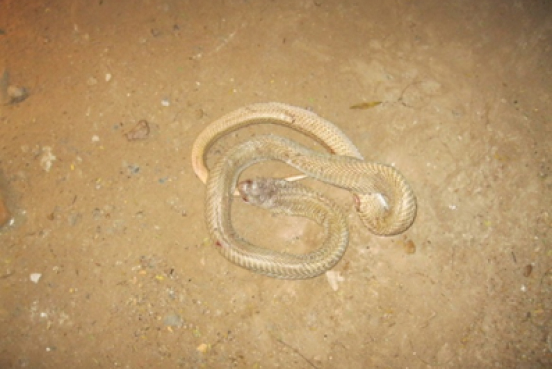
The affected cubs are members of a pride of five Kruger lions all aged about one year at Tata Steel Zoological Garden, Jamshedpur, Jharkhand (India). These lions were transported from National Zoological Garden Pretoria, South Africa and after the completion of quarantine period; they were released in the open enclosure for public display. A 1600 meter square enclosure area was provided to them for day hours and individual feeding cell for night shelter. As a routine practice, the lion cubs were released into the open enclosure area in the morning for public display. As a natural instinct, most of their time was spent in exploring things around the enclosure. On 29th November, 2012, afternoon, the female cubs were found playing with a snake inside the enclosure. The snake was held in the mouth by two of the female cubs and at the same time cubs were also bitten by the snake. The two male cubs were away and were apparently not involved. Quickly, all the cubs were taken into the feeding cell for examination. The snake was also retrieved from the open enclosure and identified as Cobra (Naja naja naja). The snake vas severely injured by the cubs and died later.
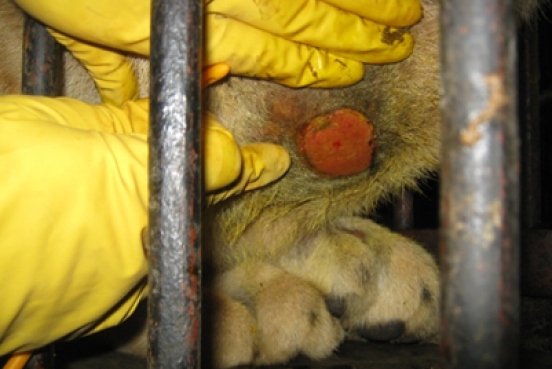
Marked lesions were observed in all the female cubs. Female cub A (Microchip number  0649)animal foot 0649) showed fang marks on lateral side of fore limbs and also on the right foot pad. There was severe swelling at all bite points; salivation and animal seemed excited with rapid respiration. Fang marks were not found in the female cub B (Microchip number 06501) but it showed limping by her left hind limb along with other signs like salivation, excitation and rapid respiration. Female cub C (Microchip number 106510) showed multiple bite wounds in the lower lip, hind limbs and navel area; however, initially it appeared normal with no signs of excitation (Fig.1). Other two male cubs behaved normally and were not involved with the snake .
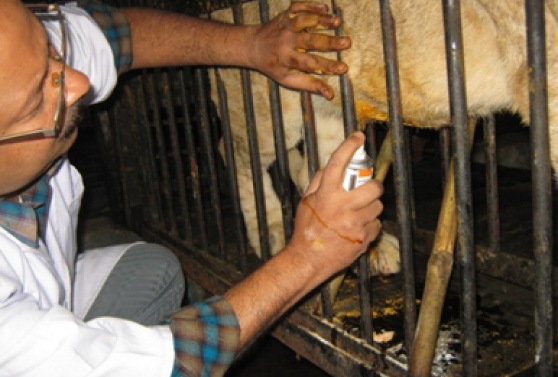
Treatment was started earliest regardless of the severity and was aimed towards reducing venom-induced inflammation and secondary bacterial infection in the damaged tissues. The affected female cubs were taken into the squeeze cage quickly one by one and Polyvalent anti-snake venom serum (Inj Vinlife, Vins bioproducts Ltd, Andhra Pradesh)- 10ml along with 100ml normal saline (Nirlife, India) was administered as a slow intravenous infusion to all the affected female cubs. Additionally, Inj Dexona (Dexamethasone 4 mg/ml, Zydus Cadila, India) Iml, Inj Avil (Phenarmine maleate 22.75 mg/ml, Aventis Pharma, India) @ 3 mg/kg, Inj Fortivir (Enrofloxacin-100 mg and Benzyl alcohol-20 mg per ml, Virbac Animal Health, India) @ 5mg/kg and Tetanus toxoid – one unit, were administered intramuscularly to each affected cub (Fig.2). Later, each cub was offered 3 kg kara beef (buffalo meat) as a routine practice. All the cubs consumed the meat properly except the female cub A and female cub B. Each cub was under strict observation.
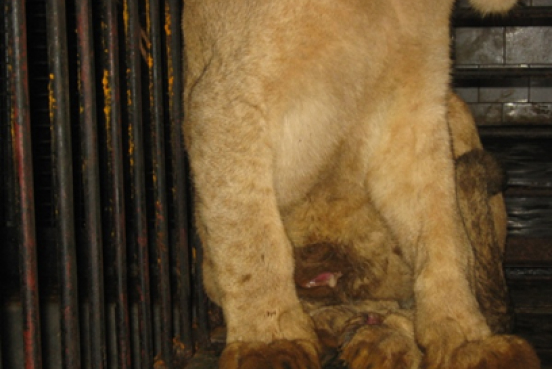
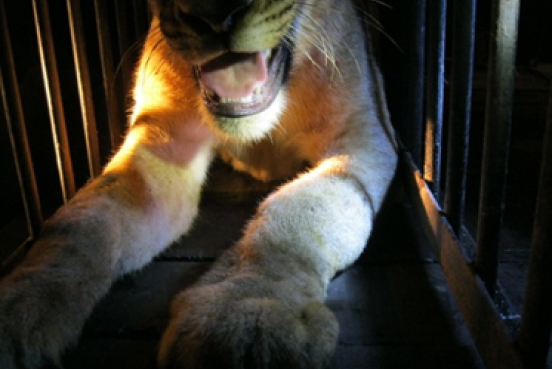
The female cub A and B showed marked recovery one week after the incident. Nevertheless, female cub C complications like tissue damage with oedema formation in the naval area and anorexia, which took around one month for complete recovery (Fig.2) During this period, female cub C, on regular interval, was used to mix with her mates to avoid stress; however, it was kept away from the public display area. After finding the behaviour to be back to normal, she was again released in the open enclosure along with all the cubs for display to public